Our Method
The Family functions as a force that shapes meaning, identity, and public life
Video: Our Method
Our Method
Adapted from Harvard Divinity School’s Religion and Public Life model for advancing religious literacy, family literacy method is both multi- and interdisciplinary, recognizing that family and family influences are embedded within historical, sociological, political, economic, and religious contexts.
These influences can almost always be found when one asks “the family question” of any given social or historical experience.
The method addresses and counteracts the negative consequences of family illiteracy
The method emphasizes context, the interconnected influences that shape families, and the skills needed to thoughtfully engage with the subject of families. It also offers approaches for addressing and counteracting the negative consequences of family illiteracy, such as widespread misunderstandings and misconceptions about marriage and family. Like religious literacy, family
literacy involves understanding the key elements that shape the human experience, are culturally and historically situated, and are often misunderstood or oversimplified in public discourse.
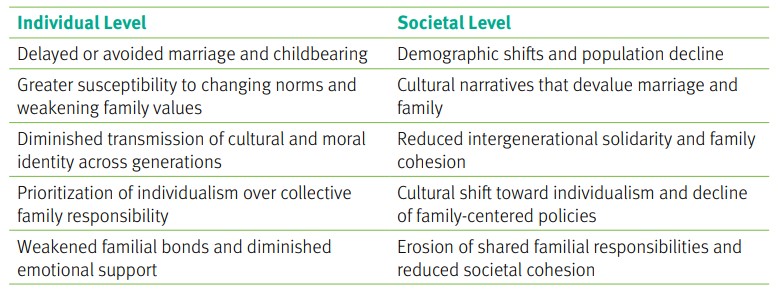
What are the negative consequences of family illiteracy?
Foundational principles that guide the method
The family is the fundamental unit of society and a powerful force in the human experience
Few individuals fully comprehend the far-reaching influence and significance of families.
A lack of understanding about the important role of the family in society manifests itself through countless negative consequences
Improved family literacy provides the tools necessary to alleviate the negative consequences of family illiteracy.
A Practical Method for Building Family Literacy Skills and Competencies
The Approach
Explore
Family is embedded in culture, not separated from it
- This approach is multi- and interdisciplinary.
- It recognizes that family and family influence are embedded within historical, sociological, political, economic, and religious contexts, and that these dimensions are interconnected rather than isolated.
- As a result, it is not possible to fully understand how individuals engage with the world without considering the broader family influences shaping their lives.
What the method emphasizes
Explore
Context, interconnection, and teachable skill
- It emphasizes context and the interconnected influences that shape families, and it builds the skills needed to engage families thoughtfully as a subject of study and as a public-life reality.
- It also addresses the negative consequences of family illiteracy, including widespread misunderstandings and misconceptions about marriage and family.
- Like religious literacy, family literacy focuses on elements of human experience that are culturally and historically situated and that are often misunderstood or oversimplified in public discourse.
What it quips the next generation to do
Explore
A practical literacy
-
Identify where family influence is shaping a question, issue, or public debate, including where it is implicit rather than explicit.
-
Analyze the family as a core social institution that structures both private life and public life.
-
Apply a family lens to interpret evidence, outcomes, and claims across disciplines and professional contexts.
-
Communicate about the family’s role in society with clarity and conceptual precision